


China outlines packaging recycling plans to boost circular economy
Key takeaways
- China has released action plans encouraging packaging recycling, urging manufacturers to use recycled materials and strengthen green design.
- The NDRC emphasizes expanding recycling infrastructure and technologies, including chemical recycling for plastics, upgraded waste paper sorting centers, and optical sorting for glass waste.
- The NDRC also states that solid household and industrial waste should be treated as valuable secondary resources.
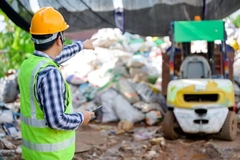
China has outlined measures for packaging recycling in two action plans, aiming to enhance circularity while supporting stronger waste governance and expanded recycling systems.
In its detailed plan for renewable resource recycling, the National Development and Reform Commission (NDRC) encourages packaging manufacturers to use recycled materials. Manufacturers of non-food-contact packaging, such as cartons, shrink film, packaging bags, and foam cushioning materials, as well as office paper producers, are encouraged to strengthen green product design.
In the plastics sector, the recycling plan calls for enhancing the quality and capacity of recycled plastics production. It is said to support leading enterprises in promoting the industrial application of chemical recycling technologies, expanding pathways for the utilization and value upgrading of low-value plastic waste.
The recycling plan further seeks to strengthen the supply of recycled paper and other materials. “The plan supports the construction of waste paper sorting and processing centers and aims to increase supplies of major waste paper categories, including containerboard,” says NDRC.
Similar initiatives are proposed for waste glass, including regional sorting centers and the use of optical sorting and “drying technologies,” as well as for waste textiles such as chemical fibers, cotton, wool, and cashmere.
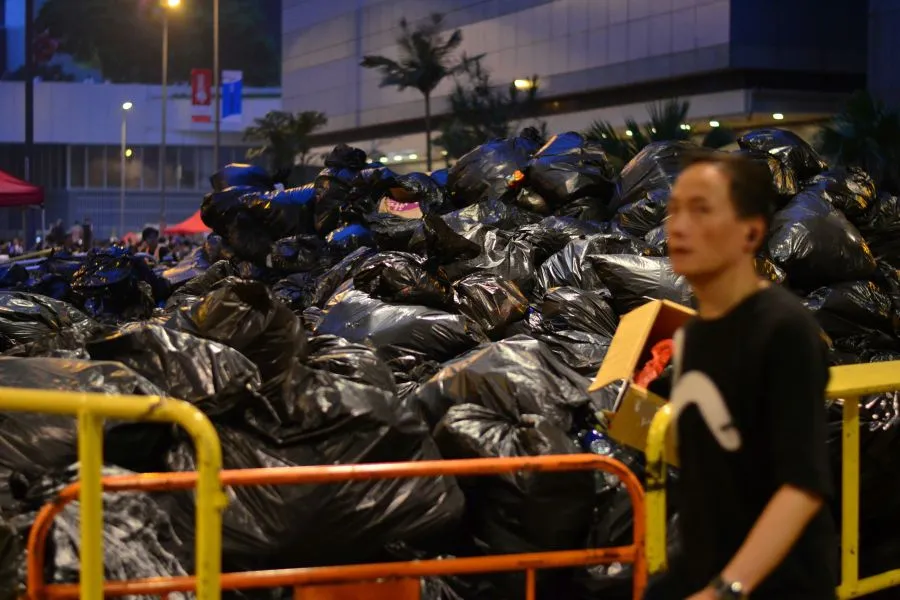 Zhou emphasizes the importance of public education, noting that approaches which resonate with the public are essential to strengthening waste management practices.Improve resource efficiency
The NDRC and 24 other government departments have also jointly drafted an action plan to achieve a “notable increase in its solid waste treatment capacity in the next five years.” The plan places priority on addressing types of solid waste that pose direct risks to public health or workplace safety.
In a regular policy briefing held by the State Council Information Office, Li Gao, deputy minister at the Ministry of Ecology and Environment, said: “The illegal dumping and disposal of household waste and industrial solid waste has not yet been fundamentally curbed, creating environmental risks and fostering illicit profit chains.”
According to China’s plan, efforts will be made to promote high-strength and fully biodegradable plastic mulch films to improve the recycling of pesticide packaging waste. In addition, for waste products and equipment from industrial and household sources, measures will focus on facilitating the extraction of recyclable materials.
“Household waste can be sorted to recover recyclable resources, such as scrap metal, waste plastics, and waste paper. Solid waste should not be viewed as trash, but as valuable resources that are currently mismanaged,” Zhou Haibing, the NDRC’s deputy head, said at the policy briefing.
The plan aims to leverage institutional frameworks and market mechanisms to guide manufacturers in scaling up the use of recycled materials, including recycled metals, plastics, and paper pulp.
Recently, Packaging Insights spoke to the Independent Commodity Intelligence Services and the China Petroleum and Chemical Industry Federation about how China has an opportunity to strengthen its investment in R&D for recycled and bio-based materials, as the EU moves toward enforcing its Packaging and Packaging Waste Regulation.