
Aimplas explores natural polymer films for food and cosmetics packaging
Key takeaways
- Aimplas’ Bioprocess project is developing biodegradable and compostable flexible films by improving the mechanical and barrier properties of bioplastics for food, cosmetics, and hygiene packaging.
- The project applies MDO extrusion and a one-step processing approach to enhance polymer performance while preserving biodegradability.
- Using natural polymers derived from renewable and industrial by-product sources, the research supports sustainable packaging solutions that align with EU restrictions on single-use plastics.
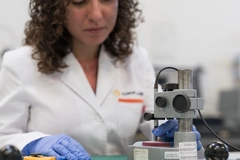
Aimplas’ Bioprocess project is researching approaches to enhance the mechanical and barrier properties of bioplastics, aiming to produce flexible films for food, cosmetics, and personal and household hygiene product packaging.
The Bioprocess project involves Potato Bioplastics, a manufacturer of bioplastics from renewable sources, and Gaviplas, a flexible film manufacturer. It is funded by the Valencian Institute of Competitiveness and Innovation (IVACE+i) through the European Regional Development Fund.
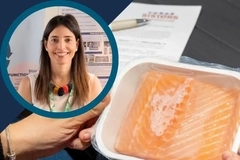
Alicia Naderpour, packaging researcher at Aimplas, says: “In Bioprocess, we have adopted the one-step approach for producing films from natural polymers, as it offers significant advantages in terms of efficiency, sustainability, product quality, and preservation of the natural properties of the materials.”
“Additionally, the goal is to enhance the properties of bioplastics by orienting polymer chains for packaging applications without compromising their biodegradability and compostability.”

She points out that the use of bioplastics in the packaging sector is mainly seen as an alternative to conventional plastics in cases where food residues remain in the packaging, making recycling difficult.
“Therefore, using bioplastics in such applications allows for the organic recovery of packaging waste to produce high-quality compost.”
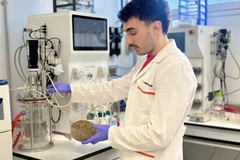
As part of the Bioprocess project, Aimplas applies Machine Direction Orientation (MDO) extrusion technology to produce flexible, biodegradable, and compostable films.
Turning by-products into packaging
Aimplas has also developed new formulations of natural polymers, such as polysaccharides, animal and plant proteins, to study the modification of their mechanical and barrier properties when processed through non-oriented sheet extrusion and MDO extrusion.
Naturally sourced materials are derived from sources such as algae, corn and potato starch, gelatin, and proteins. These are often sourced from industrial by-products, which can add value to these low-cost materials.
Rosa González, lead researcher of the packaging cluster at Aimplas, explains: “The use of chemically unmodified natural polymers is gaining ground in these applications, as they are suitable for manufacturing packaging and plastic products that are banned under the Single-use plastic directive.”
“However, these materials must have the appropriate characteristics to be processed using conventional packaging manufacturing technologies, such as extrusion processing, and must also meet the necessary requirements to preserve the products they contain.”