

SEMICON Japan 2025 live: Merck highlights data-driven optimization for lightweight packaging
Key takeaways
- Merck’s Smash initiative focuses on reducing packaging volumes and environmental impact, with goals to cut 10–15% of packaging weight per unit sales by 2030.
- The company emphasizes data-driven solutions to optimize packaging design for sustainability and safety.
- Merck implements a container return model that reuses and refurbishes packaging to minimize waste and enhance supply chain sustainability.
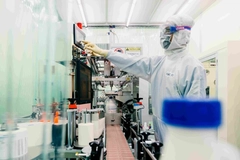 (Image credit: Merck).
Merck presents its packaging material innovation, lightweighting, and reuse initiatives at the ongoing SEMICON Japan 2025, December 17–19, in Tokyo.
Live on the show floor, Packaging Insights speaks to the German multinational science and technology company about its packaging reduction strategies and how it plans to develop “future-proof” packaging.
“At Merck, reducing packaging footprint is a key priority under our Smash initiative, as our Life Science business ships over 30,000 packages each day. Through the ‘Shrink’ pillar, we focus on eliminating unnecessary materials, minimizing packaging volume, and introducing more recyclable solutions,” tells us Jeffrey Whitford, vice president of sustainability and social business innovation at Merck.

“We have redesigned packaging across product lines, implemented product innovations such as room-temperature-stable antibodies that reduce the need for cold-chain materials, and strengthened collaboration with suppliers and customers to scale these improvements globally. By 2030, our goal is to reduce 10–15% of packaging weight per unit sales.”
Future-proofing packaging
Merck highlights its over 100 packaging improvement projects with Smash contributing to “important changes such as the annual reduction of more than 400 metric tons of packaging and the development of greener coolers for cold chain shipments. ”
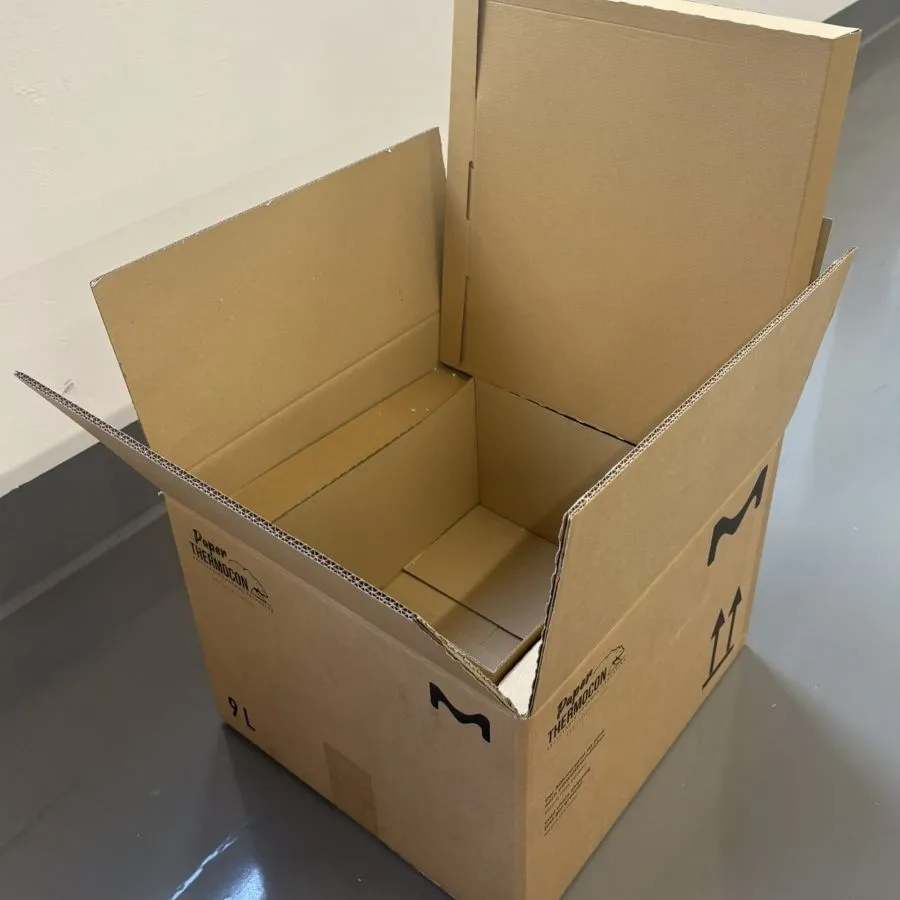 Merck developed a green cooler that keeps certain life science products cool as needed for shipment. It uses paper and starch instead of PS. “We remain committed to developing packaging that is efficient to store, transport, and recycle — and to continuously reducing our environmental impact,” says Whitford.
“Our strategy for future-proof packaging is focused on using a data-driven approach to reduce our environmental footprint without compromising on performance or quality.”
Merck aims to integrate sustainability into the earliest stages of product as well as packaging design, expanding the use of recyclable and bio-based materials, and developing innovations. Such inventions include its room-temperature-stable products, which reduce the need for cold-chain packaging.
“Through global collaboration across R&D, operations, suppliers, and customers, we are working to deliver packaging that is more efficient and more sustainable.”
Digital solutions
On the show floor, Dr. Surésh Rajaraman, executive vice president and head of the thin film business unit at Merck, says that the company is using AI and machine learning to come up with new materials.
He says that its responsibility is to invest in innovation and form collaboration across the value chain.
A spokesperson at Merck’s Electronics Business says data analytics is integral to optimizing packaging solutions, ensuring safety, sustainability, and efficiency throughout the lifecycle of packaging containers.
“For new packaging designs, we analyze customer needs and leverage data to create solutions that meet regulatory compliance and the highest safety standards, while enhancing sustainability performance.”
“For existing packaging, data tracking systems allow us to monitor containers throughout their lifecycle, ensuring they are returned to our facilities for reconditioning and reuse. This way, we can ensure that reused containers meet the highest standards for safety, purity, and quality.”
For Thin Films, the company says it conducts rigorous component testing involving valve assessments to align with cylinder usage cycles, extending their lifespan and reducing resource consumption.
“Our packaging engineering standards are built on regulatory, industry, and internal requirements, ensuring compatibility, optimal fill volumes, and leak-tightness.”
Merck Electronics offers emergency response capabilities, 24/7 technical support, and field services to customers. “Data analytics play a critical role in enhancing emergency preparedness by optimizing response strategies and ensuring comprehensive service levels.”
Container return model
Merck Electronics says it is committed to delivering packaging solutions that uphold high standards of safety and purity while advancing sustainability. “Our approach is rooted in circular economy principles, where packaging is designed for reuse, refurbishment, and recycling where possible.”
The Merck Electronics Specialty Gases and Thin Films products employ a return container model that treats containers as valuable assets rather than disposable waste. “Containers such as cylinders, tube trailers, stainless steel, and quartz bubblers are designed for multiple reuse cycles.”
“Once customers have used the product, the containers are returned to our production facilities for cleaning, refurbishment, and refilling. This closed-loop process is heavily supported by data tracking systems to ensure efficient lifecycle management and successful refurbishment.”
The company spokesperson says that this approach significantly reduces waste and minimizes the need for manufacturing new containers, contributing to a more sustainable supply chain.
“In Thin Films, we are actively enhancing the sustainability of packaging for various container sizes (4 L, 11 L, 19 L, and 38 L). For bulk shipments, we are eliminating foam inserts and transitioning to reusable overpack boxes that can withstand multiple round trips.”
“This initiative, focused on the last-mile delivery process, reduces single-use packaging and improves overall environmental impact.”
With live reporting from Sichong Wang at SEMICON Japan 2025